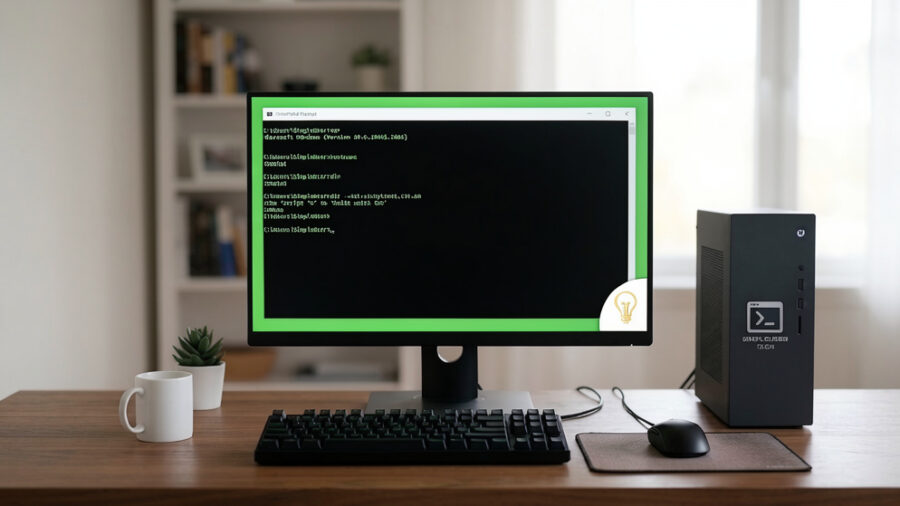
Running a large language model on your own hardware used to be a fantasy reserved for research labs with GPU clusters. That changed in a big way. Open-source models have improved dramatically, consumer hardware has gotten more powerful, and software tools have matured to make local inference accessible to anyone with a decent computer. You can now run a capable LLM at home, no cloud subscription required, with full control over your data and no ongoing API costs.
This guide walks you through setting up a local LLM environment from scratch. No prior machine learning experience is required. If you can install software and follow command-line instructions, you can have a local LLM running within an hour. The setup scales from a basic configuration on a standard laptop to a more powerful rig for serious experimentation.
Choosing Your Hardware
Hardware requirements depend on the model size you want to run and the speed you expect. A 7 billion parameter model can run on virtually any modern computer with 8 GB of RAM. You can load it with 4-bit quantization and get usable response speeds on a machine with integrated graphics or a mid-range dedicated GPU.
For 13 billion parameter models, aim for 16 GB of system RAM or a GPU with at least 8 GB of VRAM. This is the sweet spot for many users. Models at this size are capable enough for most practical tasks, and the hardware requirements are accessible. A gaming PC built in the last few years or a MacBook Pro from 2021 or later handles this comfortably.
If you want to run 34 billion parameter models or larger, you need 32 GB of RAM minimum and a GPU with 16 GB of VRAM. High-end workstations and dedicated AI rigs can push into the 70 billion parameter range. Most home setups should start with a 7B or 13B model and upgrade hardware only if they find the capabilities insufficient.
Selecting a Model
The open-source model landscape has matured rapidly. Llama, Mistral, Qwen, and Phi are among the families that offer strong performance at various sizes. For a first local setup, look for a model that balances capability with resource requirements. Mistral 7B is an excellent starting point. It is compact, performs well across a wide range of tasks, and has an active community with plenty of guides and fine-tuned variants.
Llama 3 8B is another strong option. Meta’s latest Llama release delivers impressive performance at the 8B parameter scale, rivaling larger models from just a year prior. Qwen 2 7B is worth considering if you need multilingual support or strong performance on technical tasks. Check the Hugging Face model repository for the most current options and community ratings.
Recommended Starting Models
– Mistral 7B: Compact, versatile, strong general performance
– Llama 3 8B: Excellent reasoning, large community, active ecosystem
– Qwen 2 7B: Multilingual support, strong technical capability
– Phi-3 Mini 3.8B: Extremely lightweight, surprisingly capable
– Gemma 2 9B: Well-rounded, good for general use cases
Setting Up the Software Stack
Option 1: llama.cpp for Maximum Compatibility
llama.cpp is the most widely used tool for running LLMs locally. It supports most popular model formats, works on CPU and GPU, and is available on Windows, Mac, and Linux. The installation process is simple. Clone the repository, compile the project, and download a model in GGUF format. GGUF is the file format that llama.cpp uses, and most models are available in this format through the Hugging Face Hub or the model developer’s website.
Once you have the executable and a model file, running inference is a single command. You type your prompt, get a response, and continue the conversation. The basic interface is terminal-based, which is fine for testing and casual use. For a more polished experience, several graphical interfaces wrap llama.cpp and provide a chat UI similar to ChatGPT.
Option 2: Ollama for Ease of Use
Ollama is the easiest path for beginners. It is a single command-line tool that handles model downloading, format conversion, and serving automatically. Install Ollama, type a command like “ollama run mistral,” and within minutes you have a running model with a chat interface. Ollama manages all the complexity under the hood: quantization, context management, and hardware acceleration.
Ollama also exposes an OpenAI-compatible API endpoint. This means applications and scripts you may already use with cloud-based models can point to your local Ollama instance instead. Hermes Agent can connect to Ollama as a model provider, letting you use your local LLM within your existing automation workflows. Check Hermes Agent for setup instructions on connecting local models via API.
Option 3: Text Generation WebUI for Advanced Users
If you want the most features and flexibility, Text Generation WebUI (oobabooga) is the most comprehensive local LLM interface. It supports multiple model formats, fine-tuning, extensions, and a plugin ecosystem. The tradeoff is complexity. Installation involves more steps than Ollama, and the interface has many options that can overwhelm new users. For serious experimentation, though, it is the most capable option available.
Configuring Your Home AI Lab
A home AI lab is more than a running model. It is an environment for experimentation, testing, and casual use. Organize your setup with clear goals for what you want to explore. Are you testing prompt engineering techniques? Comparing model performance across tasks? Fine-tuning a model on your own data? Each use case suggests a different configuration.
Create a dedicated directory for your models. Use consistent naming conventions so you can track which model variant you are testing. Keep notes on prompts you have tried, parameters that worked well, and observations about model behavior. Over time, this becomes a valuable reference as you experiment with different models and techniques.
Allocate system resources thoughtfully. If your model runs on GPU, be aware of VRAM usage. Other applications competing for the same GPU will slow inference significantly. Close unnecessary applications when running intensive inference tasks. If you are running multiple models simultaneously for comparison, plan your memory allocation so each model gets adequate resources without swapping.
Practical Experiments to Try
The best way to learn what your local LLM can do is to use it. Here are some experiments to get started, ordered from simple to more involved.
Start with basic conversation. Chat with the model about everyday topics. Note how it handles context, how long responses are, and how well it stays on topic. This gives you a baseline for the model’s conversational ability.
Try summarization next. Paste a news article or technical document and ask for a summary. Compare the output to what you would write yourself. Adjust summarization prompts to get the length and style of summary you want. Experiment with different prompt formulations and observe how they affect the output.
Move to code-related tasks. Ask the model to write a function, explain code you have written, or debug a problem. Many local models are surprisingly capable at programming tasks. Compare the outputs across different models to see which ones handle your programming language of choice best.
Test long-context capability. Provide a lengthy document or conversation history and ask questions that require connecting information from different parts of the context. This reveals how well the model maintains coherence across extended inputs. Some smaller models lose track of information after a few thousand tokens, while larger models maintain coherence much longer.
Experiment with fine-tuning if you have specific use cases. Fine-tuning a 7B model on a few hundred examples of your data can produce a specialized model that outperforms general models on your specific tasks. This is more advanced but highly rewarding. Tools like Ollama and llama.cpp support fine-tuning workflows, and guides are available in their respective communities.
Optimizing Performance
Model performance depends heavily on quantization settings. Quantization reduces the precision of model weights, trading a small amount of quality for significant gains in speed and memory efficiency. Four-bit quantization is the sweet spot for most home setups. It reduces model size by roughly 75 percent with minimal quality loss for models up to 13B parameters. Six-bit quantization provides even better quality retention with moderate memory savings.
GPU acceleration makes a dramatic difference. If you have a compatible GPU, enable CUDA, ROCm, or Metal acceleration depending on your hardware. CPU inference can work for casual use, but GPU acceleration is essential for responsive performance with larger models. Verify that your inference tool is detecting and using your GPU correctly by checking the output during startup.
Context window management also affects performance. Larger context windows consume more memory and slow inference. If you do not need long context, configure your model to use a smaller window. This frees memory and speeds up responses. Many models default to context windows that are larger than most users need in practice.
Scaling Your Lab Over Time
As you get comfortable with your initial setup, consider how you might expand. Adding a second GPU extends the range of models you can run efficiently. Increasing RAM lets you load larger models or run multiple models simultaneously. Building a dedicated rig, perhaps using components from an older gaming PC, gives you more control over the system.
Keep an eye on new model releases. The open-source model landscape moves quickly. A new release can change the optimal hardware configuration significantly. Subscribe to community forums and model announcements to stay informed. Our guide on extending Hermes Agent with custom integrations can help you connect your local LLM setup into broader automation workflows once you are ready to scale.
Frequently Asked Questions
FAQs
A home AI lab puts you in control. No subscription fees, no data leaving your network, no rate limits. You experiment at your own pace with the models and configurations that suit your needs. The barrier to entry has never been lower. Pick a model, pick a tool, and get started today. The future of AI is not just in the cloud. It is also sitting on a desk near you, waiting to be turned on.